top of page

Linked List Position-Based Data Retrieval Using Dynamic Memory Allocation in C++
Overview
Tools and Technologies Used
-
C++
-
Linked Lists
-
Dynamic Memory Allocation
-
Pointers
-
User Input Validation
-
Functions and Modular Programming
-
Console-Based Application Development
In order to improve my knowledge of linked lists, dynamic memory allocation, pointer manipulation, and data validation in C++, this project was created as a programming exercise. Making two linked lists—one with data values and another with location values was the aim. Based on the locations given in the second linked list, the computer then fetches and shows elements from the first linked list.I learned how to create and navigate linked lists, dynamically allocate memory, verify user input, and develop algorithms that work with several linked data structures through this assignment.
Key Steps
1. Designed the Linked List Structure
To start, I constructed a unique node structure that would be the basis for both linked lists. The lists can expand dynamically when new values are added since each node keeps an integer value and a link to the next node. Instead of using fixed-size arrays, this allowed me practice working with pointers and dynamic data structures.

2. 2. Built and Populated the Linked Lists
I created routines to add new nodes and create two linked lists using user input after establishing the node structure. The primary data values are stored in the first list, L, and the position values that will be utilized to retrieve particular elements from the first list are stored in the second list, P. I was able to deal with several linked data structures at once while practicing linked list building and dynamic memory allocation.

3. Validated User Input and List Data
I added validation checks to make sure the user input accurate data once the lists were successfully formed. The software confirms that the positions in list P appear in ascending order and are contained inside the boundaries of list L. The user is prompted to try again if incorrect data is entered. This increased the program's dependability and reaffirmed the significance of defensive programming techniques.

4. Implemented Position-Based Data Retrieval
After confirming the circuit's DC behavior, I connected an oscilloscope to view waveform behavior and swapped out the DC power source for a function generator. I started by creating a square wave signal at about 1 kHz, then I looked at the waveform that appeared across one of the resistors. The oscilloscope verified that the circuit correctly reacted to the incoming signal by displaying the anticipated waveform shape and frequency.

5. Tested Results and Managed Memory
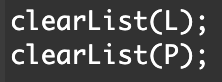
Lastly, I created cleanup routines to deallocate all dynamically allocated memory, displayed both linked lists, and confirmed that the proper values were obtained. In addition to ensuring that the program ran effectively and without memory leaks, this step reaffirmed the need of memory management when working with linked data structures.
All together !
bottom of page